WIIRI
WIIRI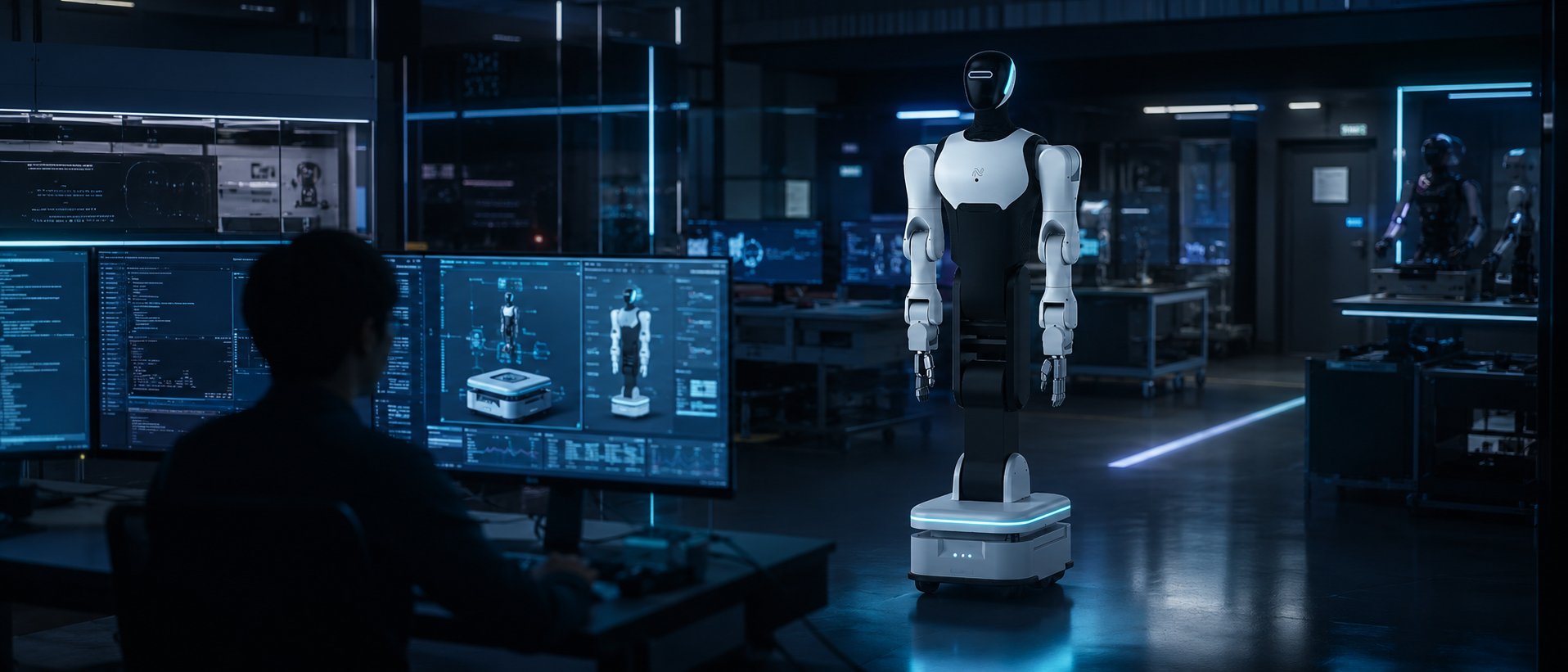
Bring embodied intelligence to real production lines, with us
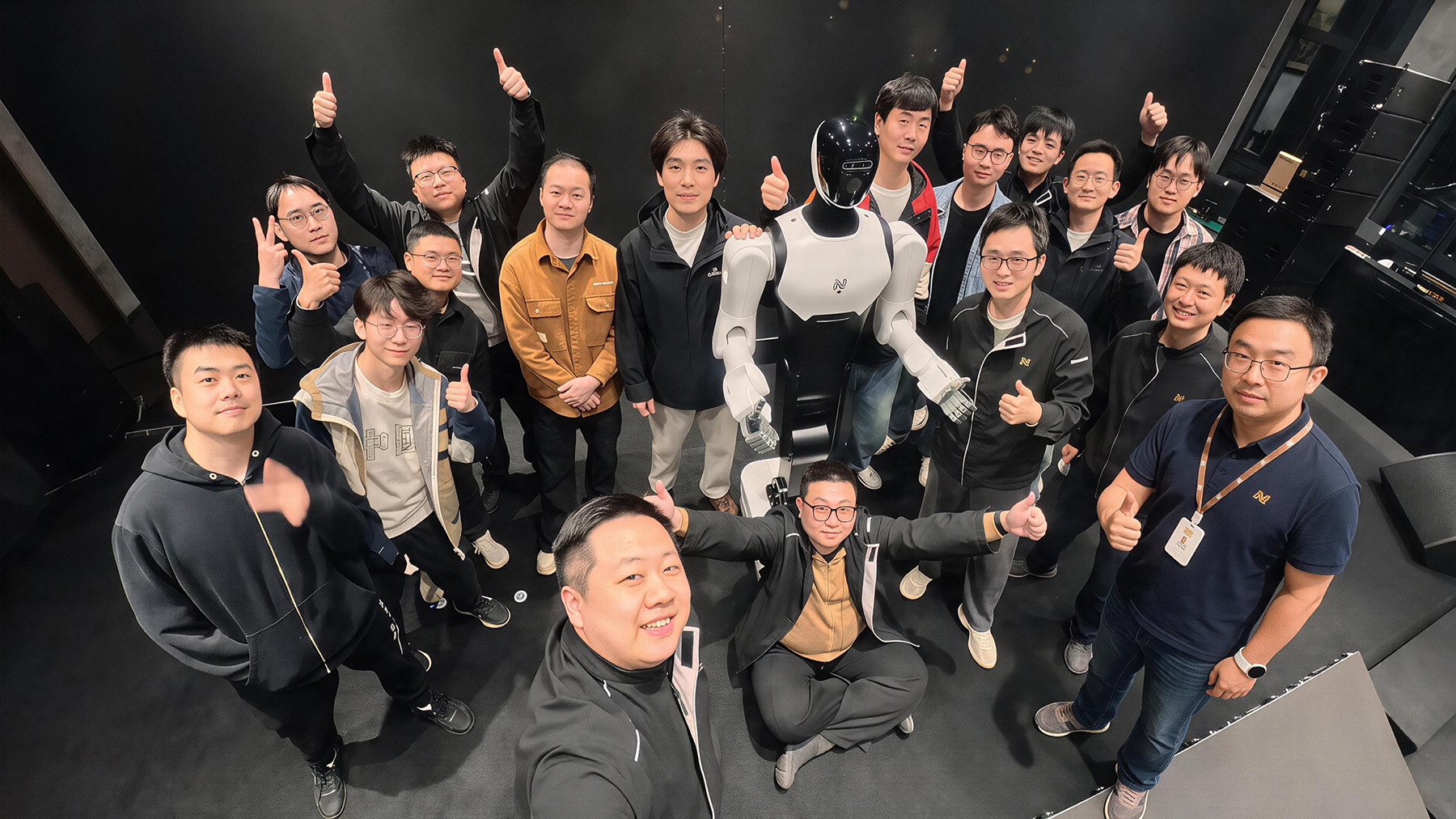
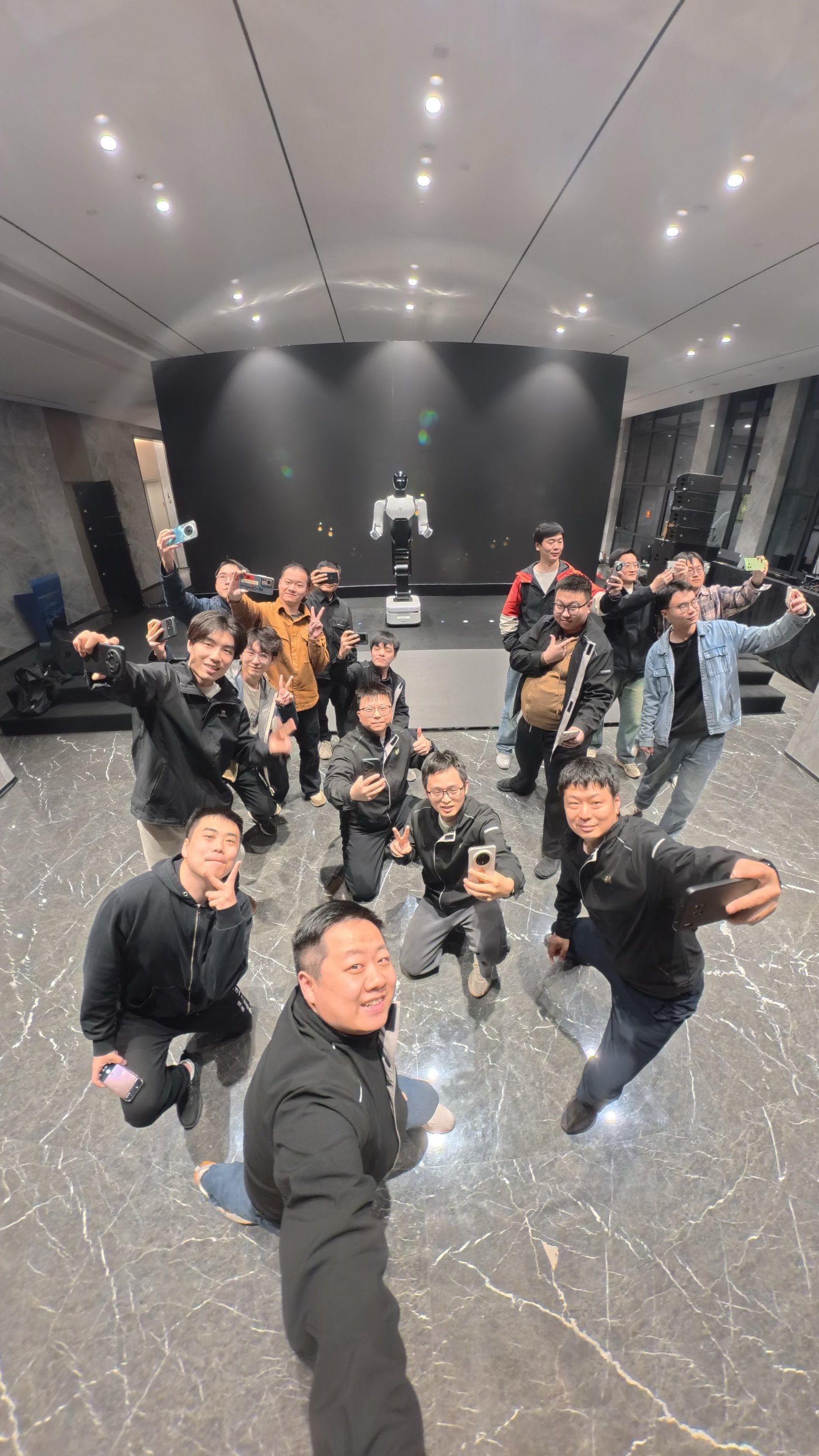
We are the team building one of Jiangsu’s first provincial embodied-AI robotics innovation centers — a cross-disciplinary R&D group that pairs frontier research with deep engineering experience, building industrial humanoids that actually ship, by Lihu Lake, Wuxi.
Application email: ying.wan@china-lsh.com
Working here
Open positions
Flexible Electronics R&D Engineer
R&D on flexible sensors and electronic skin: sensing mechanisms, electrode fabrication and processes, flexible-device design and performance testing.
ApplyShow detailsHide details
Responsibilities
- R&D of flexible sensors and electronic skin, including sensing-mechanism studies, electrode fabrication and process development
- Flexible-device design and performance testing
- Independent experiment design, data analysis and technical troubleshooting
Requirements
- Master’s degree or above in electronic science and technology, materials engineering, microelectronics, flexible electronics or a related field
- Innovative thinking, rigorous analytical skills, and strong teamwork and technical communication
Nice to have
- Sensor R&D experience, with familiarity with sensing mechanisms, electrode fabrication and process flows
- Project experience in electronic skin, with command of flexible-device design and performance-testing methods
- Able to design experiments, analyze data and troubleshoot independently, and proficient with relevant test instruments
Flexible Electronics Research Scientist
Applied fundamental research for flexible-electronics manufacturing, spanning electronic packaging, polymers, optical engineering, additive manufacturing and semiconductor manufacturing.
ApplyShow detailsHide details
Responsibilities
- Research applied fundamental theory and methods for flexible-electronics manufacturing
- Carry out in-depth research in areas such as electronic packaging, polymers, optical engineering, additive manufacturing and semiconductor manufacturing
Requirements
- PhD from a renowned university in China or abroad (may be relaxed for exceptional candidates)
- Familiarity with applied fundamental theory and methods in flexible-electronics manufacturing, with in-depth research experience in electronic packaging, polymers, optical engineering, additive manufacturing, semiconductor manufacturing or similar fields
- Good written and spoken English
- Strong teamwork and execution, with good communication, coordination and management skills
Humanoid Robot Motion Control Engineer
Design, simulate and tune motion-control algorithms for humanoid robots on real prototypes, focusing on gait planning, joint trajectory tracking and balance control. Open to 2025/2026 graduates.
ApplyShow detailsHide details
Responsibilities
- Design, develop and iterate humanoid motion-control algorithms, focusing on core modules such as whole-body gait planning, joint trajectory tracking and balance control, and supporting optimization of our second- and third-generation prototypes and engineering samples
- Validate motion-control algorithms in simulation (MATLAB/Simulink, etc.) and tune control parameters with prototype test data to improve stability, agility and responsiveness
- Work with the mechanical, electrical-control and algorithm teams to implement control solutions, resolve control issues on prototypes and support the project’s lightweight, high-performance goals
- Write and maintain motion-control technical documents and test reports, and help standardize the control-algorithm development process
- Follow advances in humanoid motion control and explore new techniques and methods for the project to drive product iteration
Requirements
- Bachelor’s degree or above in control engineering, automation, electrical engineering, robotics engineering, measurement and control technology or a related field
- 2025/2026 graduate with a strong interest in humanoid motion control; understanding of legged or bio-inspired robot locomotion is a plus
- Solid grounding in control theory, including PID, fuzzy control and model predictive control
- Clear logical thinking, strong problem-solving skills, and good teamwork and communication
- Proficiency in MATLAB/Simulink for control modeling and simulation, and able to develop and debug simple control algorithms independently
- Basic knowledge of kinematic and dynamic modeling, and able to carry out preliminary kinematic analysis of humanoid joints or the whole robot
- C/C++ skills; embedded programming experience and the ability to port and debug algorithms with the electrical-control team are a plus
- Familiarity with advanced methods such as trajectory planning, force control and MPC; related project or competition experience is a plus
Nice to have
- Strong coursework in control theory, modern control theory, motion control, robotics, theoretical mechanics and MATLAB simulation
- Experience in robotics competitions such as RoboMaster or RoboCup, responsible for the motion-control module
- Course or research projects on legged or humanoid robot motion control
- Familiarity with ROS, and able to build simple motion-control nodes on it
Humanoid Robot Electrical Systems Engineer
Own the whole-robot electrical architecture, wiring harness, power system and bus reliability for our humanoid robots, along with EMC, electrical safety and system integration. 3+ years of robot electrical experience.
ApplyShow detailsHide details
Responsibilities
- Electrical architecture: define the whole-robot electrical topology, power and bus architecture, and the design and interface standards that keep electrical, mechanical and control systems working together
- Wiring harness: 2D/3D harness layout, routing optimization, and bend and interference checks; select cables and connectors; deliver drawings, BOMs and process documents; follow assembly through and resolve issues
- Component selection: select, validate and integrate power, drive, sensor and communication components against the robot’s performance, structural and reliability requirements
- Power system: estimate whole-robot power consumption, design multi-stage power distribution, and optimize power sequencing, voltage drop, temperature rise and protection for a stable supply
- Signal reliability: working with EtherCAT, Ethernet, CAN FD, RS-485 and other buses, optimize signal integrity under dynamic conditions and resolve interference, packet loss and timing issues
- EMC and safety: improve EMC through grounding, shielding and filtering, and implement protection against overvoltage, overcurrent, short circuits, ESD and insulation failure
- Integration and iteration: run whole-robot electrical integration, reliability and endurance tests, troubleshoot electrical faults, capture design standards, and support project delivery and production iterations
Requirements
- Bachelor’s degree or above in electrical engineering, automation, electronic information, mechatronics or a related field; master’s or PhD preferred
- 3+ years of electrical-architecture and harness design for humanoid, quadruped or industrial robots; experience taking humanoid robots into real deployment is a plus
- Expertise in robot electrical architecture, power and bus design, with solid skills in signal debugging, EMC optimization and system reliability fixes; demonstrable delivered projects are a plus
- Familiarity with robot harness and connector selection standards and with fatigue- and flex-resistant joint harness design, and able to integrate and debug sensors and servo drives
- Proficiency in at least one harness design tool such as SolidWorks Electrical, EPLAN, E3 or CATIA Electrical, and able to carry electrical debugging through to closure independently
- A closed-loop engineering mindset, rigorous design and strong execution; able to anticipate and avoid electrical risks and keep improving through reviews and iteration
- Extensive teamwork experience; experience coordinating resources across teams is a plus
Senior Robotics Algorithm Engineer
Mobile manipulation, embodied AI and robotic grasping: enable robots to understand tasks, plan actions and reliably carry out mobile grasping, dual-arm coordination, transport, machine tending and tool use, taking frontier algorithms onto real robots. You may focus on one or more of the areas below, depending on your background.
ApplyShow detailsHide details
Responsibilities
- Develop core mobile-manipulation algorithms, building a complete loop of mobility, perception, planning, grasping, manipulation and control
- Build manipulation capabilities, including single- and dual-arm grasping, manipulation of unstructured objects, contact-rich manipulation, visual servoing, force/compliance control and failure recovery
- Connect perception, navigation, decision-making, planning, control and execution, raising task success rate, stability, safety and generalization in complex real-world settings
- Take algorithms from simulation to real robots, owning debugging, validation, performance optimization and productization on physical platforms
- Track frontier work in embodied AI, robot manipulation, imitation learning, reinforcement learning, Diffusion Policy and VLA/VLM-driven manipulation, and explore its use in mobile manipulation
Requirements
- Master’s degree or above in robotics, AI, automation, computer science or a related field; PhD preferred
- Research or engineering experience in robot manipulation, arm planning and control, mobile robots, embodied AI or mobile manipulation; hands-on experience with real robots is a plus
- Familiarity with one or more of motion planning, grasp planning, trajectory optimization, inverse kinematics/dynamics, collision detection, visual servoing, force/compliance control and navigation planning
- Experience with one or more robotics development and simulation tools such as ROS/ROS 2, Isaac Sim or MuJoCo
- Strong programming and engineering skills in Python, with experience implementing algorithms, running experiments and deploying on robot systems
- Familiarity with deep-learning frameworks such as PyTorch or JAX; experience with imitation learning, reinforcement learning, Diffusion Policy or VLA/VLM is a plus
Nice to have
- Publications at venues such as NeurIPS, ICML, ICLR, RSS, CoRL, ICRA, IROS or CVPR, or high-quality patents in robotics or AI
Senior AI Engineer
Lead core mobile-manipulation algorithms and manipulation capabilities, taking them from simulation to real robots. Master’s degree with 5+ years of experience, able to lead cross-team technical efforts.
ApplyShow detailsHide details
Responsibilities
- Develop core mobile-manipulation algorithms, building a complete loop of mobility, perception, planning, grasping, manipulation and control
- Build manipulation capabilities, including single- and dual-arm grasping, manipulation of unstructured objects, contact-rich manipulation, visual servoing, force/compliance control and failure recovery
- Connect perception, navigation, decision-making, planning, control and execution, raising task success rate, stability, safety and generalization in complex real-world settings
- Take algorithms from simulation to real robots, owning debugging, validation, performance optimization and productization on physical platforms
- Track frontier work in embodied AI, robot manipulation, imitation learning, reinforcement learning, Diffusion Policy and VLA/VLM-driven manipulation, and explore its use in mobile manipulation
Requirements
- Master’s degree with 5+ years of experience in robotics, AI or a related field; PhD preferred
- 3+ years of R&D in robot manipulation, arm planning and control, mobile robots, embodied AI or mobile manipulation; experience deploying on real robots is a plus
- Familiarity with one or more of motion planning, grasp planning, trajectory optimization, inverse kinematics/dynamics, collision detection, visual servoing, force/compliance control and navigation planning
- Experience with one or more robotics development, simulation or planning tools such as ROS/ROS 2, Isaac Sim or MuJoCo
- Strong programming and engineering skills in Python, and able to deploy algorithms on real robot systems
- Proficiency in PyTorch or JAX
- Able to coordinate a team and lead cross-functional technical efforts
Nice to have
- Publications at international conferences such as NeurIPS, ICML, ICLR, RSS, CoRL or ICRA, or core patents
Robot Vision Engineer
Develop and deploy core robot-vision algorithms (detection, segmentation, pose estimation and point-cloud processing), giving grasping, mobile manipulation and navigation reliable recognition and localization.
ApplyShow detailsHide details
Responsibilities
- Develop core robot-perception algorithms, including object detection, segmentation, pose estimation and point-cloud processing
- Provide reliable object recognition, spatial localization and scene understanding for grasping, mobile manipulation, navigation, sorting, transport and machine tending
- Deploy, debug, validate and optimize perception algorithms on real robot platforms
- Take part in data collection, model training, evaluation and iteration to make algorithms robust to occlusion, lighting changes and cluttered scenes
- Track frontier work in robot perception, 3D vision, multimodal perception and VLM/VLA, and explore its use in robot tasks
Requirements
- Master’s degree or above in computer vision, robotics, AI, automation, computer science or a related field; PhD preferred
- 3+ years of R&D in machine vision, robot perception, 3D vision or a related area; experience shipping real robot or industrial vision systems is a plus
- Familiarity with one or more of object detection, image segmentation, 6D pose estimation, keypoint detection, depth estimation, SLAM, point-cloud processing and multi-sensor fusion
- Experience with one or more sensors such as RGB/RGB-D, depth, industrial and stereo cameras or LiDAR, and their data-processing pipelines
- Proficiency in Python with strong algorithm implementation and engineering skills; C++ is a plus
- Familiarity with PyTorch or JAX, and with common tools and frameworks such as OpenCV, PCL, Open3D and ROS/ROS 2
- Good problem analysis and a systems mindset, and able to keep improving algorithms against real robot tasks
Nice to have
- Publications at international conferences such as CVPR, ICCV, ECCV, NeurIPS, ICML, ICLR, RSS, CoRL or ICRA, or core patents
Humanoid Robot Large-Model Application Engineer
Adapt and deploy large language models (LLMs) and vision-language models (VLMs) on humanoid robots, focusing on natural human-robot interaction, scene understanding and task planning.
ApplyShow detailsHide details
Responsibilities
- Adapt and deploy LLMs and VLMs for humanoid robots, focusing on natural human-robot interaction, scene understanding and task planning
- Fine-tune, deploy and optimize large models for our humanoid prototypes, improving inference speed and accuracy for on-robot (edge) deployment
- Work with the motion-control and computer-vision teams to integrate large models with motion control and perception, strengthening autonomous decision-making and flexible interaction
- Write technical documents and test reports for large-model work, and explore new LLM + VLM applications on humanoid robots
- Follow advances in large models and vision-language fusion, and explore new techniques for the project to make our robots smarter
Requirements
- Master’s degree or above in mathematics, physics, computer science, AI, intelligent science, data science, automation or a related field
- Strong interest in LLMs, VLMs and their use on humanoid robots; a grounding in human-robot interaction and autonomous decision-making is a plus
- Solid computer-science fundamentals, Python, and a grasp of machine-learning and deep-learning basics
- Rigorous logical thinking, strong problem-solving, good cross-team collaboration and communication, and quick adaptation to project needs
- Familiarity with at least one large-model framework or model (e.g. Hugging Face, LangChain, LLaMA, ChatGLM); fine-tuning or prompt-engineering experience is a plus
- Understanding of vision-language models such as CLIP and BLIP, and able to build and debug simple vision-language tasks
- Deep-learning fundamentals including CNNs and Transformers, and able to train and deploy simple models with PyTorch or TensorFlow
- A basic understanding of how humanoid robots work; the ability to propose large-model adaptation and optimization for real use cases is a plus
Nice to have
- Strong coursework in machine learning, deep learning, NLP, computer vision, introduction to AI, and data structures and algorithms
- Projects or coursework on large-model fine-tuning and deployment, or on vision-language fusion
- Familiarity with ROS, and able to build large-model interaction modules on it
- Participation in AI or big-data competitions, or related academic publications
Humanoid Robot Embedded Hardware Engineer
Own the hardware architecture, circuit design, debugging and iteration of our humanoid’s PDU power module, dexterous-hand control board and cerebellum (real-time control) board, from R&D and validation through to production, keeping the robot’s hardware stable and reliable.
ApplyShow detailsHide details
Responsibilities
- Break down hardware requirements, design and review architectures, and carry out the full hardware workflow, from component selection, schematics and PCB design to circuit and thermal simulation, DFMEA and EMC validation
- Lead circuit design, PCB layout, testing and fixes for the PDU, dexterous-hand control board, cerebellum core board and interface boards (especially high-speed boards), owning the full hardware lifecycle
- Select key components, confirm their performance and reliability, and resolve compatibility issues and hardware faults
- Follow projects end to end, locate and analyze hardware defects, and deliver corrective actions to keep projects on track
- Support the software and hardware teams through functional, performance and reliability testing, and help carry products through each iteration
Requirements
- Bachelor’s degree or above in electronic information, automation, measurement and control, mechatronics or a related field, with 5+ years of hardware development; experience with robotics or autonomous-driving hardware platforms is a plus
- End-to-end development experience on complex hardware such as biped or quadruped robots or intelligent equipment, and able to handle design, debugging, production follow-up and issue closure independently
- Proficiency with mainstream EDA tools such as Cadence, Altium Designer and PADS, plus circuit and thermal simulation, and able to design high-density PCBs of 8 layers or more
- Solid analog and digital electronics, expertise in high-speed and power-circuit design and debugging, and familiarity with interface hardware for I2C, SPI, CAN, EtherCAT, PCIe, MIPI, USB and Ethernet
- Familiarity with mainstream embedded platforms such as Rockchip, ST and HiSilicon, strong peripheral-circuit adaptation skills, and the ability to develop a hardware platform independently
- Expertise in whole-robot power distribution, and in high-speed routing (DDR, eMMC, PCIe, GMSL2, HDMI), PCB thermal design, impedance matching and signal-integrity optimization
- Familiarity with hardware validation, EMC, safety compliance, thermal and reliability design standards, with full hardware-testing and production-optimization experience
- Proficiency with oscilloscopes, network analyzers, signal generators and other test equipment, and strong hardware troubleshooting skills
Test Engineer
Plan and run tests for our humanoid robots and their components, covering functional, motion-performance and environmental reliability testing, and track defects through their full lifecycle. 3+ years of system or reliability testing.
ApplyShow detailsHide details
Responsibilities
- Draw up test plans and approaches for the humanoid robot and its components from product requirements and design specs, and build test environments and platforms
- Run functional tests, motion-performance tests (joints, gait, payload, etc.) and environmental reliability tests (temperature and humidity, vibration, drops, etc.) on the full robot, and write test reports
- Write, review and maintain test cases, build a test-case library and keep improving coverage
- Test product software (motion control, perception, interaction, etc.) for functionality, performance, compatibility and stability
- Track defects through their full lifecycle, run defect reviews, drive R&D to locate and fix issues, and perform regression testing
- Define and apply reliability and safety test standards, and support safety-certification testing (e.g. CE, FCC)
- Analyze test data, identify product risks and quality trends, report on quality and take part in design reviews
- Keep learning, following new testing technologies and standards (e.g. automated and simulation testing) to improve test processes and efficiency
Requirements
- Bachelor’s degree or above in measurement and control, automation, electronic information, mechatronics, computer science or a related field
- 3+ years of system-level or reliability testing for robots, smart hardware or consumer electronics
- Expertise in system-level testing processes and methods, including test planning, test-case development and test reporting
- An understanding of how core robot components such as motion control, motor drives, sensors and batteries work and how to test them
- Proficiency with oscilloscopes, multimeters, signal generators, electronic loads and CAN/serial bus debugging tools
- At least one automated-testing language or framework (Python/Pytest, LabVIEW, etc.), with experience writing test scripts and tools
- Familiarity with environmental reliability testing (high/low temperature, damp heat, vibration, drop, salt spray, etc.), safety-certification processes and related national standards
- Good communication and teamwork
Nice to have
- Training in testing theory and methods, covering software testing, hardware testing and reliability engineering
- Training on test tools and equipment such as oscilloscopes, multimeters, CAN/serial bus analyzers, data-acquisition systems and automated-testing tools (Python/Pytest, LabVIEW)
- Training on industry standards such as robot safety (ISO 13482) and environmental reliability testing (GB/T, IEC)
Team & lab